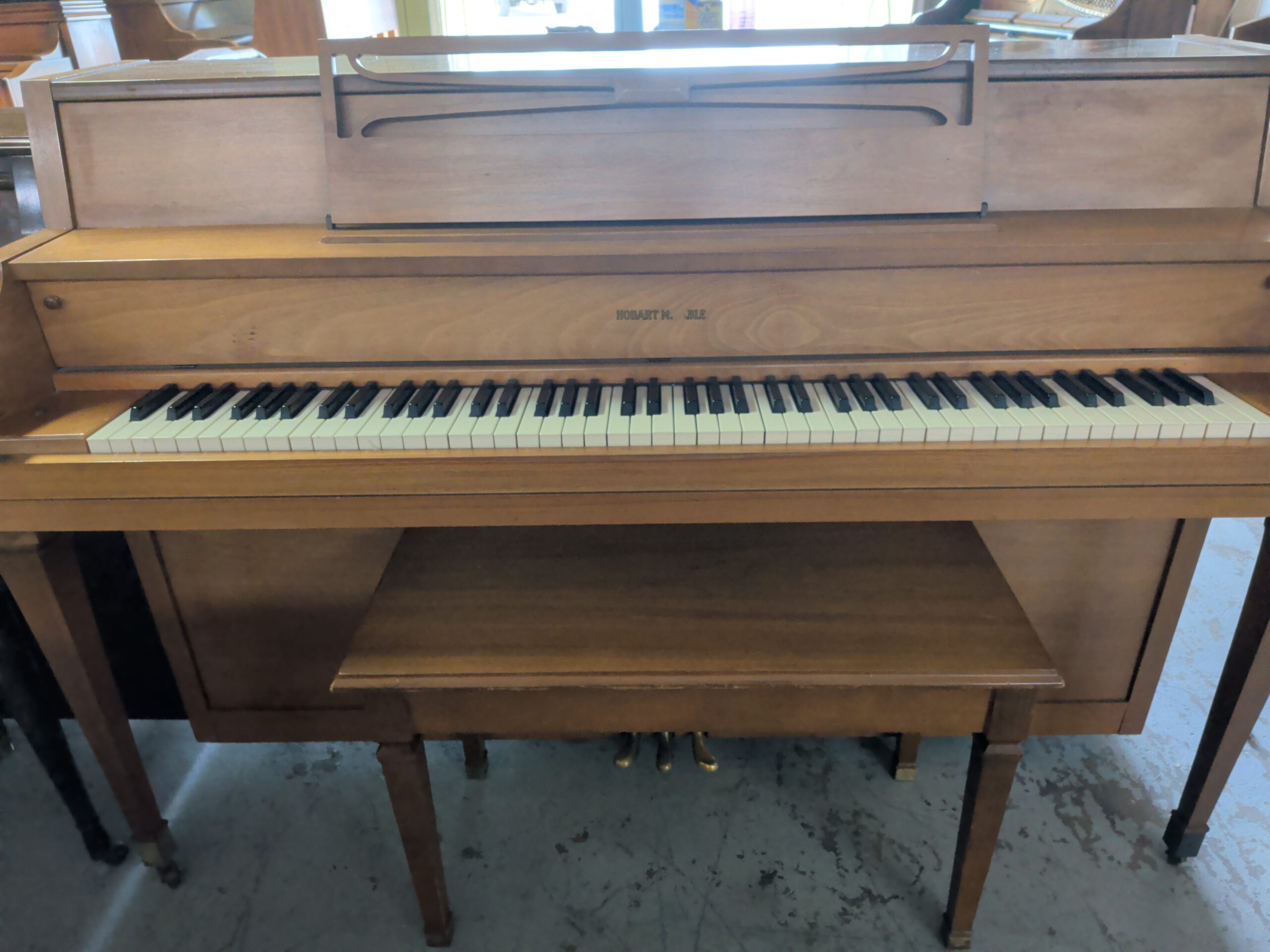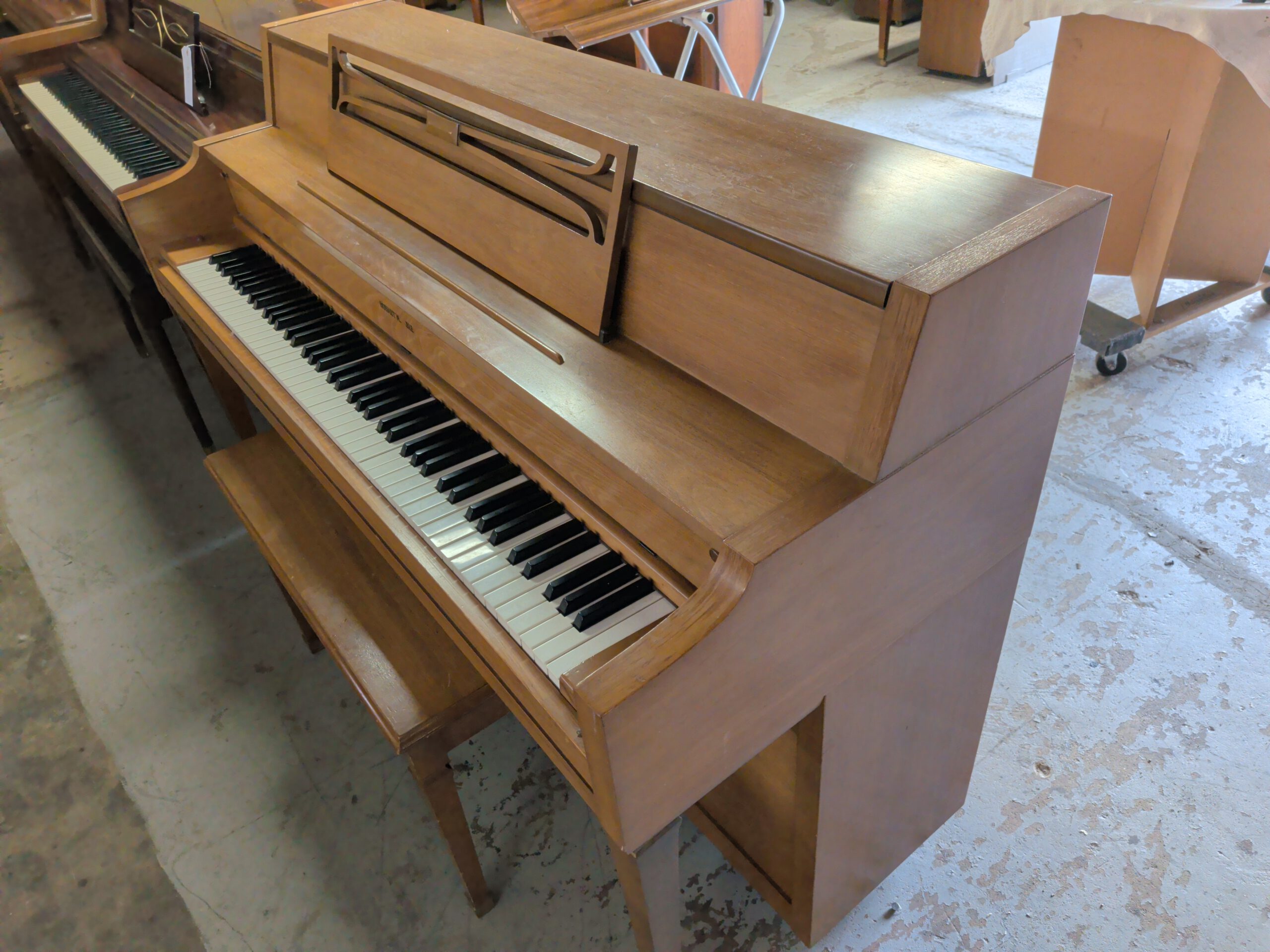
Here’s a little vertical spinet that’s ready to bring music into a cozy corner of your home—perfect for beginners or anyone who needs to save some floor space without sacrificing the joy of real strings and hammers.
The Piano Man’s Technical Opinion
Hobart spinets use a drop action—meaning the hammers sit below the key level and get yanked upward by little metal rods called “stickers.” It’s clever engineering for a compact piano, but it does mean the touch is a bit less responsive than a console or upright. Fair condition here translates to: everything works, the action is intact, but don’t expect lightning-fast repetition or a buttery touch. The tone is modest—spinets just don’t have the resonance of taller pianos because the shorter strings can’t sing as deeply. But for practice, learning chords, and getting your fingers trained? Absolutely fine. Just set your expectations to “honest little workhorse,” not concert grand.
Hobart pianos were manufactured by the Hobart M. Cable Company, originally founded in the 1890s in LaPorte, Indiana. They built a solid reputation for making dependable, mid-grade pianos aimed at American families. Over the decades, the brand changed hands a few times and production moved around, but Hobart pianos from the mid-20th century—especially their spinets—were widely sold through department stores and music shops as affordable, space-saving instruments for homes and schools.
While not considered a premium brand like Steinway or Mason & Hamlin, Hobart instruments were built with honest craftsmanship and served millions of students and hobbyists well. They’re a quintessential example of the American-made spinet era—practical, compact, and designed to get music into as many living rooms as possible.